


Top Places to Visit in Ahmedabad in 2026
Ahmedabad is India’s first UNESCO World Heritage City — a designation given in 2017 recognising the extraordinary concentration of heritage architecture in the old city. It is home to the Sabarmati Ashram where Gandhi developed the philosophy of non-violent resistance. It is the city where the National Institute of Design and CEPT University have shaped Indian and global design thinking for decades. It is where some of the best vegetarian food in the world is served from street carts that have been operating in the same spot for 50 years.
If you are a student at one of Ahmedabad’s universities, a young professional in one of the city’s growing sectors, or someone who has just arrived — this guide is for you. Real places, honest advice, practical information, and the kind of local knowledge that only comes from actually being here.
Understanding Ahmedabad Before You Start Exploring
Ahmedabad sits on both banks of the Sabarmati River. The old city is on the east bank and the new city on the west. Understanding this basic geography saves considerable confusion.
Zone | Key Areas | Known For |
Old City (East Bank) | Bhadra, Manek Chowk, Kalupur, Jamalpur | UNESCO heritage pols, historic mosques, temples, the best street food |
Central Ahmedabad | Ellisbridge, Paldi, Navrangpura | Cultural institutions, Sabarmati Riverfront, colleges, mid-range residential |
West Ahmedabad | Satellite, Bodakdev, Thaltej, Prahlad Nagar | Upscale residential, malls, IT offices, young professional belt |
South Ahmedabad | Maninagar, Vatva, Narol | Middle-class residential, industrial zones, Hindu temples |
North Ahmedabad | Chandkheda, Sabarmati, Motera | Newer developments, Sardar Patel Stadium, growing residential |
SG Road Corridor | Sindhu Bhavan Road, Sola, Ghuma | IT and corporate offices, premium residential, cafes and restaurants |
Outskirts | Adalaj, Lothal, Modhera, Rani ki Vav | Day trips — some of the most significant archaeological and heritage sites in India |
Ahmedabad Metro is now operational on two corridors — the East-West corridor and the North-South corridor — and covers key zones efficiently. For areas not yet on the metro, autos and app-based cabs are reliable. Check current metro routes at Ahmedabad Metro Rail.
If you are looking for well-located student or professional accommodation, Stanza Living has high-qualitypaying guest in Ahmedabad near major college campuses and professional zones. Explore options at Stanza Living Ahmedabad.
Top Historical and UNESCO Heritage Places to Visit in Ahmedabad in 2026
Ahmedabad’s UNESCO World Heritage City designation in 2017 recognised what residents and scholars have known for decades — that the old city contains an extraordinary concentration of 15th to 19th century Islamic, Hindu, and Jain architecture, organised around a unique neighbourhood system called the pol.
The Pols of the Old City — Living UNESCO Heritage
The pol system is Ahmedabad’s most distinctive contribution to urban history. A pol is a self-contained neighbourhood — typically one community, one caste, or one trade — with a single fortified entrance gate, shared wells, shared temples or mosques, and housing that shares walls and courtyards in a way that creates remarkable community cohesion. Over 600 pols survive in the old city and many are still inhabited by the same communities that built them centuries ago.
Detail | Information |
Entry | Free |
Best way to explore | Guided heritage walk — Ahmedabad Heritage Walks |
Official walk schedule | Daily morning walks from Swaminarayan Temple, Kalupur — 7am to 9am |
Walk cost | Free (donations welcome) |
Time needed | 2 hours for the guided walk, longer if you explore independently |
Best pols to visit | Mangaldas ni Pol, Doshiwada ni Pol, Kuvawala Pol |
Official city heritage info | |
Best time | Early morning on a weekday when the pols are active but not crowded |
The Stanza Living lens: The Ahmedabad Heritage Walk is one of the finest free urban experiences in India. The guides — local residents who have grown up in the pols — take you through lanes that visitors on their own would never find, into courtyards that have not changed since the 18th century, past wooden facades carved with extraordinary detail. Do this first. Everything else in the old city makes more sense after it.
Jama Masjid Ahmedabad — Where Two Traditions Meet
Built in 1424 by Sultan Ahmed Shah, the founder of Ahmedabad, the Jama Masjid is one of the finest examples of the Indo-Saracenic style — a fusion of Hindu temple architecture and Islamic mosque design that is unique to Gujarat. The mosque has 260 columns supporting 15 domes and the shaking minarets — two towers that oscillate when one is pushed — are a famous engineering curiosity.
Detail | Information |
Entry | Free |
Official info | |
Timings | Open all day, avoid Friday afternoon prayer time for tourist visits |
Time needed | 45 minutes to 1 hour |
Location | Bhadra, Old City |
Metro access | Old High Court Metro Station |
Dress code | Conservative — cover arms and legs, remove footwear |
Combine with | Bhadra Fort, Ahmed Shah’s Mosque, and the old city walk |
Bhadra Fort and Teen Darwaza — The Original City Centre
Built by Sultan Ahmed Shah in 1411 when he founded the city, Bhadra Fort was the original royal palace and administrative centre of Ahmedabad. The Teen Darwaza (Three Gates) opposite the fort is a magnificent triple-arched gateway built in the same period and is the defining image of old Ahmedabad. The area between the fort and the Teen Darwaza was the original royal processional route.
Detail | Information |
Entry fee | Free (fort exterior and Teen Darwaza area) |
Official ASI info | |
Timings | Fort open during daylight hours |
Time needed | 45 minutes |
Location | Bhadra, Old City |
Metro access | Old High Court Metro Station |
Combine with | Jama Masjid (5 minutes walk), the old city heritage pols |
Adalaj Stepwell (Vav) — The Most Beautiful Stepwell in India
A five-storey stepwell built in 1499 by Queen Rudabai in memory of her husband, Adalaj Vav is 20 kilometres north of Ahmedabad and represents the absolute pinnacle of the stepwell architectural tradition. The quality and density of the stone carving — every surface, every column, every landing carved with extraordinary detail — is unlike anything else in Indian architecture.
Detail | Information |
Entry fee | Rs 25 for Indian citizens |
Online ticket booking | |
Official ASI info | |
Distance | 20 km north of Ahmedabad |
Timings | Sunrise to sunset, all days |
Time needed | 1 to 1.5 hours |
Best time | Morning when light enters the lower levels |
Combine with | Gandhinagar (15 minutes further) |
The Stanza Living lens: Adalaj Vav is one of the genuinely great pieces of architecture in India and most people outside Gujarat have never heard of it. The stepwell descends five storeys into the earth and every surface is carved. The light at the lower levels in the morning is extraordinary. Make the 30-minute drive and give it a proper 90 minutes.
Hutheesing Jain Temple — Victorian Jain Architecture at Its Finest
Built in 1848 by a wealthy Jain merchant during a famine year (partly to provide employment), the Hutheesing Temple is dedicated to Dharamnath, the 15th Jain Tirthankara. The white marble temple with its intricate carvings, ornamental spires, and surrounding complex of smaller shrines is one of the finest examples of 19th century Jain temple architecture in India.
Detail | Information |
Entry | Free |
Official info | |
Timings | 10am to 1pm and 3pm to 7pm |
Time needed | 45 minutes to 1 hour |
Location | Near Delhi Darwaja, Old City |
Dress code | Conservative — remove footwear, no leather items inside |
Photography | Restricted inside the inner sanctum |
Sidi Saiyyed Mosque and the Lattice Windows
Built in 1573 in the last year of the Sultanate of Gujarat, the Sidi Saiyyed Mosque is small in scale but extraordinary in detail. The ten stone lattice windows (jalis) on the rear and side walls are among the finest examples of stone carving in the world. The most famous — depicting an intertwined tree of life — has become the symbol of Ahmedabad and is the logo of the Indian Institute of Management Ahmedabad.
Detail | Information |
Entry | Free |
Official info | |
Timings | 7am to 7pm, closed Friday afternoons |
Time needed | 30 to 45 minutes |
Location | Lal Darwaja area, Old City |
Metro access | Old High Court Metro Station |
Photography | The jali windows are the primary subject — morning light is better |
Sabarmati Ashram — Where India’s Independence Was Shaped
The home and headquarters of Mahatma Gandhi from 1917 to 1930, the Sabarmati Ashram is where Gandhi developed and lived the philosophy of non-violent resistance. The Dandi March — the 241 kilometre walk to the sea to protest the salt tax — began from here on March 12, 1930. The ashram museum contains Gandhi’s personal belongings, correspondence, and a remarkable collection of photographs documenting the independence movement.
Detail | Information |
Entry | Free |
Official website | |
Timings | 8:30am to 6:30pm daily |
Time needed | 1.5 to 2 hours |
Location | Ashram Road, near the Sabarmati Riverfront |
Metro access | Sabarmati Metro Station (North-South Line) |
Do not miss | Hridaya Kunj — Gandhi’s personal residence — and the Anavil Smarak permanent exhibition |
Best time | Weekday morning for a quieter, more reflective experience |
The Stanza Living lens: Sabarmati Ashram is not just a tourist site — it is a place of genuine historical weight. The simplicity of Gandhi’s personal quarters, the spinning wheel, the sandals, the correspondence with world leaders written on the same simple wooden desk — the scale of what was planned and executed from this modest space is staggering. Do not rush it.
Top Museums and Cultural Institutions in Ahmedabad
Calico Museum of Textiles — One of the Greatest Textile Museums in the World
Housed in a haveli in Shahibaug, the Calico Museum contains one of the most significant collections of Indian textiles in existence — royal Mughal fabrics, rare temple textiles, handwoven silks, and an extraordinary collection of antique carpets. It is considered by textile scholars worldwide to be among the finest specialised museums anywhere.
Detail | Information |
Entry | Free but registration required |
Official website | |
Timings | Morning tours 10:30am, closed Wednesdays and national holidays |
Booking | Advance registration recommended at Calico Museum |
Time needed | 2 hours (guided tour format) |
Location | Shahibaug, North Ahmedabad |
Important | Entry strictly by guided tour only — no independent wandering |
The Stanza Living lens: The Calico Museum is one of the finest museums in India by any measure and it is almost entirely unknown outside specialist circles. The collection of Mughal textiles alone is worth visiting. Book in advance and treat it as a half-morning experience.
Sardar Vallabhbhai Patel National Museum
Dedicated to Sardar Vallabhbhai Patel — the Iron Man of India who unified the princely states — the museum is housed in the historic Shahibaug Palace and contains personal memorabilia, documents, photographs, and exhibits documenting Patel’s extraordinary role in post-independence India. This is a must-visit for anyone interested in thehistorical places in Ahmedabad.
Detail | Information |
Entry fee | Rs 20 for Indian citizens |
Official info | |
Timings | 10am to 5:30pm, closed on Mondays and national holidays |
Time needed | 1 to 1.5 hours |
Location | Shahibaug, North Ahmedabad |
Shreyas Folk Museum — Gujarat’s Living Craft Heritage
A museum documenting the folk art, crafts, and textiles of Gujarat’s diverse communities — including Kutch embroidery, Rabari craft, Banjara textiles, and the painted clay work of the Prajapati community. One of the most authentic folk art collections in the state.
Detail | Information |
Entry fee | Rs 30 for Indian citizens |
Official info | |
Timings | 10am to 6pm, closed on Mondays |
Time needed | 1 to 1.5 hours |
Location | Shreyas Tekra, Ambawadi |
Top Parks and Public Spaces in Ahmedabad
Sabarmati Riverfront — The Best Urban Public Space in Gujarat
A 10.5 kilometre promenade along both banks of the Sabarmati River, developed over the past decade, the Riverfront has transformed what was a flood-prone and largely inaccessible river edge into one of the best urban public spaces in India. Walking paths, cycling tracks, gardens, food stalls, boat rides, and event spaces along both banks.
Detail | Information |
Entry | Free |
Boat rides | Available at multiple ghats — Ahmedabad Municipal Corporation |
Best time | Early morning for walkers and cyclists, evening for the general public atmosphere |
Location | Runs along the river from Gandhi Bridge to Sardar Bridge and beyond |
Metro access | Multiple metro stations along the riverfront corridor |
Kite flying | The Riverfront is the best place in Ahmedabad for Uttarayan kite flying on January 14 |
Kankaria Lake — The People’s Park of Ahmedabad
A circular lake built in the 15th century by Sultan Qutb-ud-Din, Kankaria has been redeveloped into a comprehensive recreational park with a zoo, a toy train, water rides, a balloonist, an aquarium, food stalls, and walking paths around the 2.25-kilometre circumference.
Detail | Information |
Entry fee | Rs 25 for adults, Rs 15 for children |
Official info | |
Timings | 9am to 10pm, closed on Mondays |
Time needed | 3 to 4 hours |
Location | Maninagar, South Ahmedabad |
Metro access | Apparel Park Metro Station |
Best time | Evening for the atmosphere and the lights |
Thaltej Tekra — A Hillock With a View
A small rocky hillock in West Ahmedabad with walking paths, a Jain temple at the top, and a surprisingly good view of the western city. Popular with early morning walkers and joggers from the surrounding residential areas.
Detail | Information |
Entry | Free |
Timings | Open all day |
Location | Thaltej, West Ahmedabad |
Best time | Early morning for the walk and the view |
Ahmedabad’s Best Neighbourhoods to Explore
Manek Chowk — The Square That Becomes a Food Market at Night
A square in the old city that functions as a jewellery and silver market by day, a vegetable market in the afternoon, and one of the best street food destinations in Ahmedabad by night. From approximately 9pm to 1am, food carts set up in the square selling Gujarati street food — the atmosphere is extraordinary.
What to Eat at Night | What It Is |
Pav bhaji | The Manek Chowk version is heavier on butter than even the Mumbai standard |
Masala doodh | Hot spiced milk — a Gujarati night-time ritual |
Ice cream | The kulfi and ice cream carts are famous across the city |
Dabeli | A Kutchi snack — potato filling in a bun with chutneys and pomegranate |
Sandwiches | The Ahmedabad-style grilled sandwich with green chutney is specific and excellent |
Detail | Information |
Night food hours | 9pm to 1am |
Location | Near Jama Masjid, Old City |
Entry | Free |
Best night | Weekends when the full range of carts is operating |
Law Garden Night Market — The Craft and Street Food Hub
A night market near Law Garden in Ellisbridge that operates from approximately 6pm to 11pm daily. Traditional Gujarati handicrafts, embroidered textiles, silver jewellery, and street food stalls make it one of the best places to buy authentic Gujarat crafts at reasonable prices.
What to Find | Detail |
Kutch embroidery | Genuine handmade pieces at better prices than retail |
Bandhani (tie-dye) | Scarves, dupattas, and fabric in traditional Gujarati patterns |
Silver jewellery | Tribal and traditional Gujarat designs |
Street food | Bhajiya, dabeli, chaat, and Gujarati snacks |
Chaniya choli (garba dress) | Particularly good selection before Navratri |
Detail | Information |
Timings | 6pm to 11pm daily |
Location | Near Law Garden, Ellisbridge |
Best time | Evening, 7pm to 9pm |
Best season | Navratri period for the widest garba clothing selection |
CG Road and Navrangpura — The Cultural and Cafes Belt
Chimanlal Girdharlal Road (CG Road) and the surrounding Navrangpura area form Ahmedabad’s most concentrated zone of independent restaurants, cafes, bookshops, and cultural spaces.
What to Do | Where |
Specialty coffee | Multiple independent cafes along CG Road and the lanes off it |
Bookshops | Crossword Bookstores, CG Road |
Evening food | The CG Road restaurant strip has everything from Gujarati thali to fast food |
Cultural events | Tagore Hall and the surrounding cultural institutions host regular events |
Weekend market | The Sunday market near Navrangpura for crafts and food |
Ahmedabad’s Hidden Gems — What Only Residents Know
Place | What It Is | Why Go | Entry and Booking |
Rani ki Vav, Patan | An 11th century stepwell 125 km from Ahmedabad — UNESCO World Heritage Site and the finest stepwell in India | On Indian currency (the Rs 100 note) — one of the greatest examples of Indian architecture | Rs 40 — ASI Booking |
Modhera Sun Temple | An 11th century Solanki dynasty sun temple 100 km north of Ahmedabad — extraordinary stone carving on an enormous tank | One of the finest sun temples in India after Konark — almost entirely uncrowded | Rs 25 — ASI Booking |
Lothal | The site of a 4,500-year-old Indus Valley Civilisation city 80 km south — the world’s oldest known dock | Walking through a city older than ancient Egypt is a specific kind of extraordinary | Rs 25 — ASI Booking |
Ahmed Shah’s Mosque | The first mosque built in Ahmedabad (1414) — smaller and earlier than the Jama Masjid, almost entirely unvisited | The oldest surviving monument of the city, 10 minutes from the Jama Masjid | Free |
Lalbhai Dalpatbhai Museum | An extraordinary private collection of Indian miniature paintings and Jain manuscripts | One of the best miniature painting collections in India | Rs 50 — near CEPT University |
Vastrapur Lake | A lakeside park in West Ahmedabad with walking paths and evening food stalls | One of the best evening spots in the new city — locals use it daily | Free |
Dada Harir Vav | A 15th century stepwell near Asarwa in North Ahmedabad — five storeys deep, almost never crowded | The octagonal well at the bottom is architecturally unique | Free |
Day Trips From Ahmedabad That Are Worth Making
Destination | Distance | What It Offers | How to Book |
Adalaj Vav | 20 km | The most ornate stepwell in India | |
Gandhinagar | 30 km | Capital city, Akshardham Temple, government complex | |
Rani ki Vav, Patan | 125 km | UNESCO World Heritage stepwell — the finest in India | |
Modhera Sun Temple | 100 km | 11th century Solanki sun temple — extraordinary stone carving | |
Lothal | 80 km | 4,500-year-old Indus Valley city and the world’s oldest dock | |
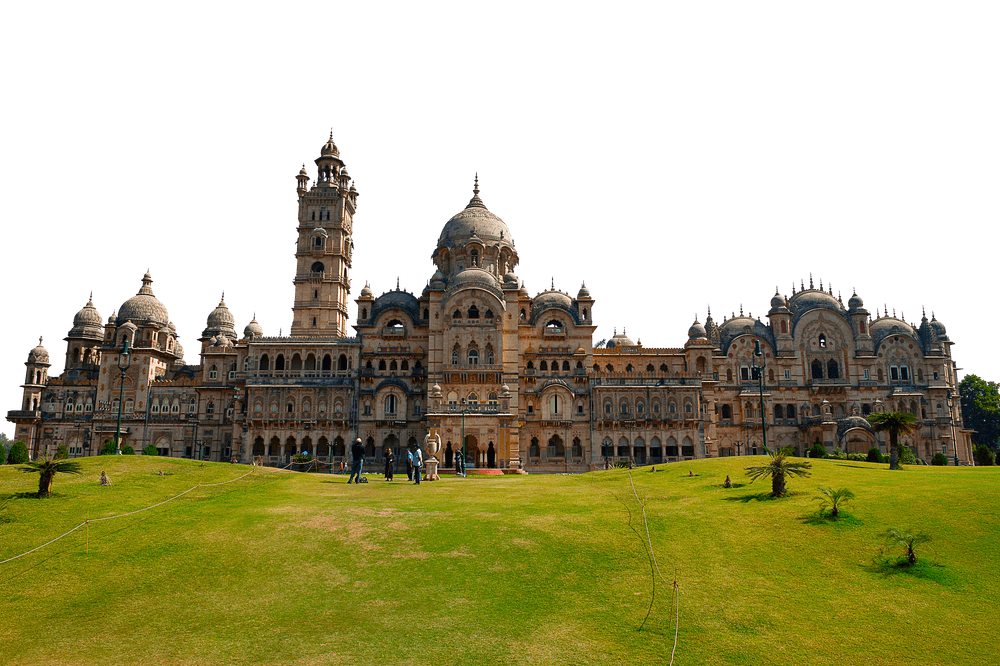
Vadodara (Baroda) | 110 km | Laxmi Vilas Palace (largest private residence in the world), Baroda Museum, Sayaji Baug | Gujarat Tourism, train via IRCTC |
Kutch and Rann | 330 km | The Rann of Kutch — one of the most otherworldly landscapes in India | Rann Utsav — October to March only |
Dwarka | 450 km | One of India’s four sacred dhams, ancient temple, coastal setting | Gujarat Tourism, train via IRCTC |
Ahmedabad’s Best Food Experiences
Ahmedabad is a predominantly vegetarian city and the food culture reflects that in the most positive way — the creativity and depth of Gujarati vegetarian cuisine is remarkable. The street food tradition here is among the best in India and the city’s sweet tooth is legendary.
The Gujarati Thali — The Complete Meal Experience
A traditional Gujarati thali is one of the most generous and varied meal experiences in Indian food culture — multiple small dishes, unlimited refills, a combination of sweet, sour, spicy, and savoury that is unlike any other regional cuisine.
Restaurant | What Makes It Special |
Gordhan Thal | Widely considered the best unlimited Gujarati thali in Ahmedabad |
Agashiye (The House of MG) | Heritage rooftop thali experience in a restored haveli — The House of MG |
Vishalla | A village-themed restaurant with traditional Gujarati thali and folk performances — Vishalla |
Rajwadu | Another village-themed option with a comprehensive traditional thali experience |
Green House Restaurant | Good quality thali in a non-theatrical setting for everyday dining |
The Ahmedabad Street Food Guide
Dish | What It Is | Where to Find the Best |
Khaman dhokla | Steamed fermented chickpea flour — soft, spongy, tangy | Any traditional snack shop — Manek Chowk and Law Garden for the street version |
Fafda jalebi | Crisp chickpea flour strips with jalebi — the definitive Ahmedabad Sunday breakfast | The stalls near Bhadra and the old city on Sunday mornings |
Dabeli | Kutchi potato filling in a bun with seven chutneys and pomegranate — a Gujarat-specific snack | Law Garden stalls and Manek Chowk |
Undhiyu | A winter seasonal dish of mixed vegetables slow-cooked in earthen pots — available November to January | Traditional restaurants across the city during winter |
Sev usal | Spiced dried peas curry topped with sev and onion | Morning stalls in the old city |
Bhajiya | Chickpea batter fried snacks — Ahmedabad does these particularly well | Vijay Bhajiya near the riverfront, multiple stalls during rain |
Chaas | Spiced buttermilk — drunk with every meal, the Gujarati equivalent of lassi | Everywhere |
Mohanthal | A dense chickpea flour sweet with cardamom and ghee | Aggarwal Sweets, Bhatiyar Gali sweet shops |
The Uttarayan Food Culture
Uttarayan — the kite festival on January 14 — is the most important food event in the Ahmedabad calendar. Every rooftop in the city has a specific food setup.
Uttarayan Food | What It Is |
Undhiyu | The traditional Uttarayan dish — made in massive quantities in every household |
Chikki | Sesame and peanut brittle — made specifically for Uttarayan |
Jalebi | Made fresh on the rooftop |
Tal sankali | Sesame seed sweets |
The Navratri Experience — Nine Nights That Define Ahmedabad
Navratri in Ahmedabad is the largest and most famous Navratri celebration in the world. For nine nights in September or October, the city essentially converts into one enormous garba (circular folk dance) event — from small neighbourhood gatherings to massive organised events in stadiums that attract tens of thousands of people.
Detail | Information |
When | September or October (date changes annually based on the Hindu calendar) |
Duration | Nine nights |
Major venues | GMDC Ground, Sports Club of Gujarat, and dozens of neighbourhood events |
Dress | Traditional chaniya choli for women, kediya for men — buy at Law Garden market |
Ticket booking | Navratri Official Events for major organised events |
Best experience | The large professional events on the first, fifth, and ninth nights |
Official info |
The Stanza Living lens: If you are living in Ahmedabad and Navratri arrives, everything else stops. You buy the clothes, you go to the events, and you dance until 3am for nine nights in a row. This is not an exaggeration. It is genuinely the most joyful public celebration in India and if you are here for it at least once you will understand why Ahmedabad residents who move away always miss this most.
Ahmedabad by Season — When to Go Where
Season | Months | What Ahmedabad Offers |
Winter | November to February | The best time to be in Ahmedabad. Cool and clear (15 to 25 degrees). Uttarayan kite festival on January 14 is unmissable. Best time for day trips to Modhera, Patan, and Lothal. |
Navratri | September or October | Nine nights of garba dancing — the defining cultural event of the city and one of the most extraordinary public celebrations in India. |
Spring | March to April | Pleasant and good for heritage walks and outdoor exploration before the heat builds. |
Summer | April to June | Ahmedabad summers are genuinely hot (40 to 46 degrees) and the humidity begins rising. Focus on early morning visits and indoor attractions like the Calico Museum and Sidi Saiyyed Mosque. |
Monsoon | June to September | The city cools significantly. The old city architecture looks extraordinary in the rain. Bhajiya eating during rain is a city-wide ritual. The Rann of Kutch trip is not possible during this period. |
Rann Utsav | November to February | If extending a trip, the Rann of Kutch white salt desert is a different planet — Rann Utsav operates exclusively during this window. |
Official and Booking Links — All in One Place
Attraction or Service | Official Website |
Gujarat Tourism (state authority) | |
ASI ticket booking (Adalaj, Rani ki Vav, Modhera, Lothal, Bhadra) | |
Archaeological Survey of India | |
Sabarmati Ashram | |
Calico Museum of Textiles | |
Ahmedabad Heritage Walks | |
The House of MG (Agashiye restaurant) | |
Vishalla Restaurant | |
Rann Utsav | |
Ahmedabad Metro Rail | |
Ahmedabad Municipal Corporation | |
Train booking (IRCTC) | |
Navratri and Gujarat events | |
Stanza Living Ahmedabad PG |
Quick Reference — Ahmedabad’s Top Places at a Glance in 2026
Place | Zone | Entry Fee | Best Time | Official Link |
Heritage Pol Walk | Old City | Free | 7am to 9am weekdays | |
Jama Masjid | Old City | Free | Morning | |
Bhadra Fort and Teen Darwaza | Old City | Free | Morning | |
Sidi Saiyyed Mosque | Old City | Free | Morning | |
Adalaj Vav | 20 km North | Rs 25 | Morning | |
Hutheesing Jain Temple | Old City | Free | 10am to 1pm | |
Sabarmati Ashram | Central | Free | Weekday morning | |
Calico Museum | Shahibaug | Free | 10:30am guided tour | |
Manek Chowk Night Market | Old City | Free | 9pm to 1am | Free |
Law Garden Night Market | Ellisbridge | Free | 6pm to 11pm | Free |
Kankaria Lake | Maninagar | Rs 25 | Evening | |
Sabarmati Riverfront | Central | Free | Morning or evening | Free |
FAQs
Q: Which are the must-visit historical places in Ahmedabad?
A: You should not miss the UNESCO Heritage Pols, Sidi Saiyyed Mosque, and the Sabarmati Ashram. These sites represent the diverse architectural and political history of the city.
Q: What is the best way to travel locally in Ahmedabad?
A: The Ahmedabad Metro is excellent for covering major corridors efficiently. For other areas, app-based cabs like Ola and Uber or local auto-rickshaws are very reliable.
Q: Are there good places to visit in Ahmedabad for food lovers?
A: Absolutely, Manek Chowk and Law Garden are famous for street food. For a traditional meal, try a Gujarati Thali at Agashiye or Gordhan Thal.
Q: What are some popular day trips from Ahmedabad?
A: Adalaj Stepwell is just 20 km away and is a must-see. Other significant sites include the Sun Temple at Modhera and the UNESCO site Rani ki Vav in Patan.
Q: Is Ahmedabad safe for solo travelers?
A: Yes, Ahmedabad is known for being one of the safest cities in India. The people are hospitable, and the public spaces are active well into the night.

What Is Usually Included in PG Rent and What Costs Extra?
Read more

How Technology Is Improving the PG Living Experience for Residents
Read more

What Is Included in PG Rent and What Costs Extra?
Read more

How PG Living Affects Productivity, Privacy, and Daily Routine
Read more

Understanding Paying Guest Accommodation in India
Read more

Common Mistakes to Avoid When Choosing a PG in Chennai: First-Time Renter Tips
Read more
- PGs in Bengaluru
- PGs in BTM Layout
- PGs in Banashankri
- PGs in Bellandur
- PGs in Domlur
- PGs in Electronic City Phase 1
- PGs in Electronic City Phase 2
- PGs in HSR Layout
- PGs in Hesaraghatta Road
- PGs in Kadubeesanahalli
- PGs in Kengeri
- PGs in Koramangala
- PGs in Kristu Jayanti
- PGs in Kumaraswamy Layout
- PGs in Kundalahalli Gate
- PGs in Magadi Road
- PGs in Mahadevapura
- PGs in Manyata Tech Park
- PGs in Marathahalli
- PGs in Mathikere
- PGs in RVCE
- PGs in Rajankunte
- PGs in Rajarajeshwari Nagar
- PGs in Reva University
- PGs in Sarjapur Road
- PGs in Soladevanahalli
- PGs in Whitefield
- Shanghai House, Bellandur
- Lincoln House, Electronic City Phase 1
- Norwich House, Marathahalli
- Vernon House, Reva University
- Durham House, Whitefield
- Seattle House, Bellandur
- Turin House, Electronic City Phase 1
- Sofia House, Sarjapur Road
- Incheon House, Reva University
- Heidelberg House, Kundalahalli Gate
- Rimini House, Bellandur
- Brussels House, Bellandur
- Frankfurt House, Koramangala
- Newport House, Reva University
- Sao Paulo House, Whitefield
- Springbok House, Kundalahalli Gate
- Bochum House, Bellandur
- Medan House, Whitefield
- Salta House, Reva University
- St Petersburg House, Manyata Tech Park
- Manchester House, Manyata Tech Park
- Ronda House, Reva University
- Salzburg House, Koramangala
- Cologne House, Mathikere
- Bratislava House, Koramangala
- Como House, Koramangala
- Vaduz House, Koramangala
- Dortmund House, Mathikere
- Fargo House, Mathikere
- Aswan House, Mathikere
- Rostock House, Mathikere
- Granada House, RVCE
- Cordoba House, RVCE
- Spielberg House, Koramangala
- Laredo House, Mathikere
- Vilnius House, Mathikere
- Podolsk House, Koramangala
- Anamur House, Kumaraswamy Layout
- Lobito House, Mathikere
- Crotone House, Rajarajeshwari Nagar
- Casper House, Domlur
- Bilbao House, HSR Layout
- Batumi House, Rajarajeshwari Nagar
- Scottsdale House, Marathahalli
- Villareal House, Koramangala
- Kiev House, Kumaraswamy Layout
- Modesto House, HSR Layout
- Cuneo House, Rajarajeshwari Nagar
- Lafayette House, Koramangala
- Modena House, Manyata Tech Park
- Jounieh House, BTM Layout
- Nome House, Rajarajeshwari Nagar
- Volos House, Kengeri
- Cicero House, Electronic City Phase 2
- Tumaco House, Kumaraswamy Layout
- Monza House, Whitefield
- Huelva House, RVCE
- Managua House, Soladevanahalli
- Serov House, Rajankunte
- Langley House, Kadubeesanahalli
- Bakersfield House, Whitefield
- Jerez House, Koramangala
- Chatham House, Marathahalli
- Viseu House, Mathikere
- Dublin House, Electronic City Phase 2
- Davao House, Soladevanahalli
- Debrecan House, Rajarajeshwari Nagar
- Wakefield House, Kadubeesanahalli
- Wichita House, Magadi Road
- Leeds House, Koramangala
- Padova House, Magadi Road
- Teresina House, Koramangala
- Rotherham House, Kumaraswamy Layout
- Krefeld House, Magadi Road
- Luhansk House, Kengeri
- Bismarck House, Soladevanahalli
- Albury House, Rajankunte
- Cayenne House, Mahadevapura
- Glencoe House, Rajankunte
- Salisbury House, Kristu Jayanti
- Cork House, HSR Layout
- Watford House, Rajankunte
- Saratov House, Rajarajeshwari Nagar
- Nottingham House, Mahadevapura
- Varda House, Hesaraghatta Road
- Kampala House, Banashankri
- Flats in Bengaluru
- Flats in BTM Layout
- Flats in Bellandur
- Flats in Electronic City Phase 1
- Flats in Electronic City Phase 2
- Flats in HSR Layout
- Flats in JP Nagar
- Flats in Koramangala
- Flats in Kumaraswamy Layout
- Flats in Manyata Tech Park
- Flats in Marathahalli
- Flats in Sarjapur Road
- Flats in Whitefield
- PGs in Mumbai
- PGs in Andheri East
- PGs in Bandra
- PGs in Juhu
- PGs in Vile Parle
- Benin House, Bandra
- Norman House, Andheri East
- Monterrey House, Juhu
- New Orleans House, Vile Parle
- Flats in Mumbai
- Flats in Andheri East
- Flats in Vile Parle
- PGs in Gurgaon
- PGs in Golf Course Extension
- PGs in HUDA City Center
- PGs in Medanta
- PGs in Sohna Road
- Dunkirk House, Sohna Road
- Tortosa House, Golf Course Extension
- Pisa House, HUDA City Center
- Taiping House, Medanta
- Crawley House, Medanta
- Flats in Gurgaon
- Flats in DLF Phase 4
- Flats in Golf Course Extension
- Flats in Golf Course Road
- Flats in HUDA City Center
- Flats in Medanta
- Flats in Sohna Road
- PGs in Pune
- PGs in Akurdi
- PGs in Balewadi
- PGs in Baner
- PGs in Dhankawadi
- PGs in Hinjawadi
- PGs in Karve Nagar
- PGs in Kharadi
- PGs in Kondhwa
- PGs in Kothrud
- PGs in Lohegaon Dhanori
- PGs in Narhe
- PGs in Senapati Bapat Road
- PGs in Shivaji Nagar
- PGs in Vadgaon
- PGs in Viman Nagar
- PGs in Wagholi
- PGs in Wakad
- Austin House, Kondhwa
- Haifa House, Baner
- Whitehaven House, Wagholi
- Malmo House, Viman Nagar
- Pelotas House, Vadgaon
- Florence House, Hinjawadi
- Karlsruhe House, Wakad
- Sarnen House, Dhankawadi
- Kingston House, Wagholi
- Shiraz House, Dhankawadi
- Parma House, Hinjawadi
- Barnsley House, Lohegaon Dhanori
- Tel Aviv House, Baner
- Giza House, Dhankawadi
- Positano House, Hinjawadi
- Tobruk House, Karve Nagar
- Girona House, Dhankawadi
- Tartus House, Vadgaon
- Amiens House, Kharadi
- Alanya House, Kharadi
- Cosenza House, Shivaji Nagar
- Alexandria House, Dhankawadi
- Livermore House, Viman Nagar
- Mansa House, Karve Nagar
- Napier House, Akurdi
- Akron House, Kothrud
- Kenitra House, Dhankawadi
- Andria House, Senapati Bapat Road
- Syzran House, Kondhwa
- Mogilev House, Narhe
- Reno House, Hinjawadi
- Ripon House, Wagholi
- Pinsk House, Vadgaon
- Schengen House, Wakad
- Sidon House, Vadgaon
- Oran House, Karve Nagar
- Dover House, Wakad
- Semey House, Wakad
- Tallinn House, Hinjawadi
- Juliaca House, Kondhwa
- Evansville House, Viman Nagar
- Herat House, Lohegaon Dhanori
- Upington House, Karve Nagar
- Mckinney House, Karve Nagar
- Boulder House, Shivaji Nagar
- Waco House, Balewadi
- Presov House, Viman Nagar
- Pereira House, Wakad
- Reynosa House, Hinjawadi
- Marseille House, Hinjawadi
- Sarasota House, Shivaji Nagar
- Torreon House, Wagholi
- Flats in Pune
- Flats in Balewadi
- Flats in Hadapsar
- Flats in Pimple Saudagar
- Flats in Wakad
- PGs in Ahmedabad
- PGs in Bopal & Shilaj
- PGs in Gota
- PGs in Navrangpura
- PGs in Vastrapur & Thaltej
- Wilmington House, Navrangpura
- Portland House, Gota
- Annapolis House, Navrangpura
- Odessa House, Gota
- Evanston House, Vastrapur & Thaltej
- Elgin House, Bopal & Shilaj
- Callao House, Navrangpura
- PGs in Hyderabad
- PGs in Ameerpet
- PGs in Aziznagar
- PGs in Gachibowli
- PGs in Gandi Maisamma
- PGs in Kondapur
- PGs in Kukatpally
- PGs in Madhapur
- PGs in Narsingi
- PGs in Q City
- Bagan House, Kukatpally
- Burnley House, Kondapur
- Amarillo House, Q City
- Vernier House, Narsingi
- Lagos House, Gandi Maisamma
- Syracuse House, Gandi Maisamma
- Mendoza House, Gachibowli
- Limoges House, Gachibowli
- Canberra House, Kukatpally
- Conroe House, Gachibowli
- Kassel House, Gachibowli
- Launceston House, Aziznagar
- Winnipeg House, Madhapur
- Bremen House, Gachibowli
- Brasov House, Aziznagar
- Munich House, Gachibowli
- Zenica House, Gandi Maisamma
- Marianna House, Gachibowli
- Sunderland House, Gachibowli
- Memphis House, Q City
- Sandakan House, Aziznagar
- Rabat House, Gachibowli
- Tuzla House, Gandi Maisamma
- Meknes House, Gandi Maisamma
- Belgrade House, Ameerpet
- Merlo House, Aziznagar
- Gateshead House, Gandi Maisamma
- Queenstown House, Aziznagar
- Flats in Hyderabad
- Flats in Gachibowli
- Flats in Hitec City
- Flats in Kondapur
- Flats in Q City
- PGs in Delhi
- PGs in Laxmi Nagar
- PGs in North Campus
- PGs in South Campus
- Sendai House, South Campus
- Cardiff House, Laxmi Nagar
- Boston House, North Campus
- Quito House, Laxmi Nagar
- Nagoya House, South Campus
- Montreal House, North Campus
- Poznan House, Laxmi Nagar
- Perugia House, Laxmi Nagar
- Kiel House, North Campus
- Kobe House, South Campus
- Sheffield House, North Campus
- Penzance House, North Campus
- Hiroshima House, South Campus
- Toronto House, North Campus
- San Diego House, North Campus
- Kawasaki House, South Campus
- Bukhara House, North Campus
- Derby House, North Campus
- Weymouth House, North Campus
- Armagh House, North Campus
- Ventura House, North Campus
- Okazaki House, South Campus
- Ancona House, Laxmi Nagar
- Nuremberg House, North Campus
- PGs in Chennai
- PGs in Anna Nagar
- PGs in Guindy
- PGs in Nungambakkam
- PGs in OMR
- PGs in Pallavaram
- PGs in Poonamallee
- PGs in Porur
- PGs in Urapakkam
- PGs in Vadapalani
- Eugene House, Poonamallee
- Doncaster House, Pallavaram
- Agadir House, Porur
- Getafe House, OMR
- Clarksville House, Nungambakkam
- Luton House, Porur
- Conway House, OMR
- Flensburg House, Nungambakkam
- Osasco House, Nungambakkam
- Toledo House, Nungambakkam
- Vitoria House, OMR
- Tulsa House, Nungambakkam
- Greensboro House, OMR
- Santa Rosa House, OMR
- Mataro House, OMR
- Tyler House, OMR
- Harrogate House, Urapakkam
- Latina House, Porur
- Sarnia House, Porur
- Irving House, Porur
- Murcia House, Anna Nagar
- Naperville House, Pallavaram
- Springfield House, Pallavaram
- Mazatlan House, Pallavaram
- Mildura House, Vadapalani
- Essen House, Porur
- Fernley House, Urapakkam
- Shumen House, Guindy
- Warrington House, Pallavaram
- Knoxville House, Pallavaram
- Grodno House, Guindy
- Flats in Chennai
- Flats in Guindy
- Flats in OMR
- Flats in Porur
- PGs in Coimbatore
- PGs in Avinashi Road
- PGs in Gandhipuram
- PGs in Saravanampatti
- Adana House, Avinashi Road
- Cali House, Avinashi Road
- Brunswick House, Avinashi Road
- Calgary House, Avinashi Road
- Smolensk House, Avinashi Road
- Carmen House, Avinashi Road
- Waterloo House, Avinashi Road
- Savannah House, Avinashi Road
- Rivas House, Gandhipuram
- Salto House, Avinashi Road
- Quimper House, Saravanampatti
- Metz House, Saravanampatti
- PGs in Greater Noida
- PGs in Knowledge Park
- Rijeka House, Knowledge Park
- Athens House, Knowledge Park
- Paris House, Knowledge Park
- Chicago House, Knowledge Park
- Adelaide House, Knowledge Park
- PGs in Vadodara
- PGs in Ajwa Road
- PGs in Fatehgunj
- PGs in Sayaji Bagh
- PGs in Waghodia Road
- Auckland House, Waghodia Road
- Wellington House, Ajwa Road
- Hamilton House, Ajwa Road
- Oslo House, Sayaji Bagh
- Drammen House, Fatehgunj
- PGs in Dehradun
- PGs in Pondha
- Kotor House, Pondha
- Semarang House, Pondha
- Luzon House, Pondha
- Marsala House, Pondha
- Zaragoza House, Pondha
- Yangon House, Pondha
- Pattaya House, Pondha
- Koh Samui House, Pondha
- Manila House, Pondha
- Rennes House, Pondha
- PGs in Indore
- PGs in Bhanwar Kua
- PGs in Geeta Bhawan
- PGs in Rau
- PGs in Vijay Nagar
- Tunis House, Rau
- Riga House, Bhanwar Kua
- Lucerne House, Vijay Nagar
- Verona House, Rau
- Boden House, Bhanwar Kua
- Elista House, Bhanwar Kua
- Pasadena House, Vijay Nagar
- Pretoria House, Bhanwar Kua
- Segovia House, Vijay Nagar
- Santa Barbara House, Bhanwar Kua
- Easton House, Vijay Nagar
- Durban House, Geeta Bhawan
- Trafford House, Vijay Nagar
- Beira House, Geeta Bhawan
- Kolding House, Geeta Bhawan
- Caen House, Vijay Nagar
- Valera House, Vijay Nagar
- Prato House, Rau
- Culiacan House, Bhanwar Kua
- Rotorua House, Rau
- Minya House, Vijay Nagar
- Cameron House, Vijay Nagar