


Libraries in Dehradun: Public Reading Rooms, Study Spaces & Book Clubs in 2026
Dehradun has a small but well-regarded set of public and institutional libraries. The Dehradun Public Library is the primary government-run reading space in the city, offering newspaper reading, reference access, and lending membership at nominal fees. The Survey of India Library and the FRI Library are specialised institutional collections. The city also has a growing paid study room market and an active reading community. For students relocating here for college or exam prep, finding the right PG in Dehradun alongside a good study space is the practical first step.
Key Takeaways
- The Dehradun Public Library charges under ₹200 per year and provides a quiet reading hall, daily newspapers, and a lending collection, but it closes by 6 PM and doesn’t have Wi-Fi.
- The FRI Library and Survey of India Library are highly specialised research collections with restricted access, not general study spaces.
- Paid study rooms in Dehradun charge ₹800,₹2,200 per month, with the highest concentration along Rajpur Road (upmarket) and Patel Nagar (budget-friendly).
- Dehradun has an active but low-profile reading community, including the Doon Library and Research Society and informal cafe-based book groups along Rajpur Road.
- Dehradun’s cool mornings (6,9 AM) are the most productive study window, and paid rooms with early access are particularly quiet at that hour.
Table of Contents
1. What Dehradun’s Library Scene Actually Looks Like
2. Dehradun Public Library (Nagar Palika Library)
3. Forest Research Institute (FRI) Library
4. Survey of India Library
5. University Libraries in Dehradun
6. Private Paid Study Rooms and Reading Spaces in Dehradun
7. Area-by-Area: Where to Find Quiet Study Spaces in Dehradun
8. Book Clubs and Reading Communities in Dehradun
9. Public Library vs. Paid Study Room: Which One Fits Your Needs
10. Tips for Studying Effectively in Dehradun’s Libraries
11. Where to Stay If You’re Studying in Dehradun
12. FAQs
What Dehradun’s Library Scene Actually Looks Like
Dehradun is a college town that doesn’t always think of itself as one. There are enough universities and professional colleges here, UPES, Graphic Era, Doon University, Uttaranchal University, to generate a large student population, but the public library infrastructure hasn’t scaled proportionately with that population. Understanding the cost of living in Dehradun as a student helps frame why the paid study room market has grown alongside the public options.
That’s the honest starting point. Dehradun has good libraries. It doesn’t have many of them, and the ones it has serve different audiences. The Forest Research Institute library is extraordinary for what it covers but isn’t a general study space. The public library is accessible and affordable but modest in scope. University libraries serve enrolled students well enough but rarely have provisions for outsiders.
What has grown is the private paid study room market, which now covers most practical needs for competitive exam aspirants, college students who want a focused space, and working professionals who need a quiet desk away from home. There are also a few book clubs worth knowing about if you’re a regular reader who’s just moved to the city.
This guide covers all of it, clearly and without padding.
Dehradun Public Library (Nagar Palika Library)
The Dehradun Public Library, run by the Municipal Corporation (Nagar Palika Parishad), is the main government-run reading facility in the city. It’s been around for decades and has a modest but functional setup: a reading hall, a lending section, newspaper and periodical access, and a collection across Hindi, English, and some regional languages.
The reading hall is the most useful feature for students. You can show up, sit down, and read your own material in a quiet environment without paying anything beyond the membership fee. For students who mainly need a place to study rather than access to the library’s own books, this works well.
What’s available:
- Reading hall with seating (capacity is limited, arrive early during peak exam seasons)
- Daily newspapers in Hindi and English
- General lending collection (Hindi and English)
- Magazines and periodicals
Membership: Annual fee is typically under ₹100,₹200. You’ll need a photo ID, address proof, and a passport-size photo. Membership is open to Dehradun residents; if you’re a student who’s moved here, your college address or hostel address usually works as proof.
Timings: Roughly 10 AM to 6 PM, Monday to Saturday. Closed Sundays and gazetted holidays. Confirm current timings directly before visiting, these occasionally shift.
Location: Near Paltan Bazaar / Clock Tower area, central Dehradun
The practical caveat: this isn’t a large or well-stocked library by any objective standard. The collection doesn’t go deep on competitive exam material, and the infrastructure is basic. But as a free, accessible, central reading space with actual quiet, it does what it needs to do for students on a budget.
Forest Research Institute (FRI) Library
The FRI Library is in a different category from everything else on this list, and it’s worth explaining why before you make a trip out there expecting a general study space.
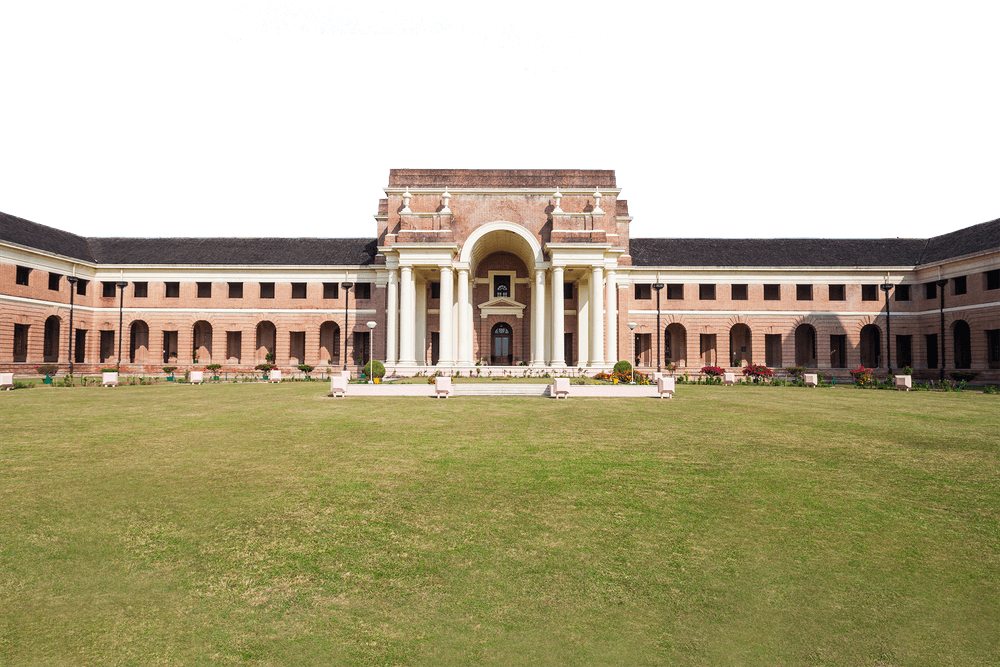
The Forest Research Institute, located on the western edge of Dehradun in a sprawling colonial-era campus, has one of the most specialised libraries in the country for forestry, ecology, environmental science, botany, and related disciplines. The building itself, built in the Greco-Roman style and completed in 1929, is one of the most photographed in Dehradun, and the library inside holds rare monographs, historical forestry records, research journals, and species data going back well over a century.
Access is typically restricted to researchers, academics, and professionals with a legitimate need to use the collection. It’s not a walk-in reading room or a study space for competitive exam preparation. Students from MSc Environmental Science, Forestry, or related disciplines who need access to rare historical material may be able to arrange a visit through their institution.
Who should know about it: Graduate and postgraduate students in environmental sciences, forestry, ecology, or biodiversity research. Also useful to know for students at Doon University or other institutions with environmental studies departments who are doing dissertation or thesis research.
Location: FRI Campus, New Forest, Dehradun
Access: Restricted; prior arrangement required through institutional channels
If you’re not in one of those specific research categories, the FRI Library probably isn’t relevant to your daily study needs, but it’s worth knowing it exists because it genuinely is one of the better-stocked specialised libraries in northern India for its field.
Survey of India Library
The Survey of India, headquartered in Dehradun since the British era, maintains an institutional library with cartographic records, topographic survey documents, geodetic data, and related scientific material. This is another highly specialised collection, useful for geography students, cartographers, land surveyors, urban planners, and researchers working with historical map data.
General public access is not available. If you’re a student or researcher who needs materials from this collection, contact the Survey of India directly to understand the access process.
Location: Survey of India Headquarters, Hathibarkala Estate, Dehradun
Like the FRI Library, it’s included here because people do search for it specifically, and knowing what it contains and who can access it saves a wasted trip.
University Libraries in Dehradun
1. Doon University Library
Doon University’s central library has a growing collection across social sciences, environmental studies, literature, and language, matching the university’s academic focus. As a state central university, Doon has invested more consistently in library infrastructure than some of the private alternatives in the city. Students attending Doon can find PG near Doon University in close proximity to the campus.
For enrolled students, the library has digital access to e-journals and databases alongside the physical collection. The reading hall tends to be quieter than most private options because of the academic environment. If you’re at Doon University and haven’t made the library part of your regular routine, it’s worth doing.
Access: Enrolled students only. External membership is generally not available.
Location: Kedarpur, Dehradun
2. UPES Library (University of Petroleum and Energy Studies)
UPES has a reasonably well-stocked library given its focus, strong on engineering, energy, petroleum science, and management. It has digital resource access including IEEE databases, Springer, and other academic journal collections relevant to its programmes. The reading facilities are modern by Dehradun university standards. Students in the area can find PG near UPES Dehradun along the Bidholi corridor. Access is for enrolled students. The campus is in Bidholi, which is on the Haridwar Bypass road, slightly outside the main city.
3. Graphic Era University Library
Graphic Era’s library covers its core disciplines, CS, IT, electronics, and management. Adequate for enrolled students doing coursework. Not notable for collections outside these areas.
Practical note for non-enrolled students: If you’re studying independently in Dehradun for competitive exams and aren’t enrolled at any of these universities, the university libraries aren’t an option. Paid study rooms or the public library are the realistic alternatives.
Private Paid Study Rooms and Reading Spaces in Dehradun
The paid study room market in Dehradun has grown meaningfully over the last three to four years. Most of this growth is concentrated around areas with high student and exam-aspirant populations: Rajpur Road, Patel Nagar, Dalanwala, and the Bidholi-Haridwar Bypass corridor near UPES.
1. What to Expect from Paid Study Rooms in Dehradun
The typical Dehradun paid study room is a locally operated setup, not a franchise chain. Most offer seating for 20,50 students, basic or good furniture depending on the operator, fluorescent or LED lighting, and a Wi-Fi connection. Monthly fees generally fall between ₹800 and ₹2,000. Fixed seat options cost more but are worth it if you’re going daily.
Competitive exam students, UKPSC, UPSC, banking, SSC, make up the core user base at most of these rooms. Some also cater to college students and working professionals who need a desk outside their accommodation.
2. Study Rooms Near Rajpur Road
Rajpur Road runs from the Clock Tower area up toward Mussoorie and passes through some of Dehradun’s more residential and student-dense neighbourhoods. Several paid study rooms have set up along this corridor and in the lanes off it. This area is convenient because it’s close to the city centre, has good food options nearby, and is relatively easy to reach from most residential zones.
Monthly fees in this zone: ₹1,000,₹1,800 for daytime access, ₹1,500,₹2,200 for extended or 24-hour access.
3. Study Rooms in Patel Nagar
Patel Nagar is another area with a noticeable concentration of coaching institutes and study rooms. It’s popular with UKPSC aspirants in particular. The options here tend to be more basic than the Rajpur Road cluster but also cheaper, ₹800,₹1,400 per month is common. For students on tight budgets who mainly need a chair and silence, Patel Nagar study rooms are worth checking.
4. Study Rooms Near Bidholi / Haridwar Bypass
Students at UPES who don’t want to study on campus sometimes use paid study rooms near the Bidholi area and along the Haridwar Bypass road. The market is less developed here than in central Dehradun, but options exist, and they tend to be less crowded than city-centre rooms.
Area-by-Area: Where to Find Quiet Study Spaces in Dehradun
A practical geography reference if you’re new to the city:
Clock Tower / Paltan Bazaar area: Closest to the Dehradun Public Library. Some paid study rooms nearby. Central and accessible by auto from most parts of the city.
Rajpur Road: Good concentration of paid study rooms. More upmarket neighbourhood, clean environment, slightly higher fees. Popular with serious exam aspirants.
Patel Nagar: More budget-friendly paid rooms. Dense with coaching centres. Practical for UKPSC and banking exam preparation.
Dalanwala: Quieter residential area. A few study rooms, less crowded than Rajpur Road options.
Bidholi / Haridwar Bypass: For students near UPES. Limited but existing options.
Sahastradhara Road / Sewla Kalan area: Growing residential zone near some colleges. Some local study room options, less documented than central zones.
Book Clubs and Reading Communities in Dehradun
Dehradun has a small but active reading community that often goes unnoticed by students new to the city. This is worth knowing if you’re a regular reader who’s just moved here and wants more than a study room. Several informal reading groups meet at cafes in Dehradun along Rajpur Road and near the Clock Tower area.
1. The Doon Library and Research Society
A historically active reading and intellectual community in Dehradun. The organisation has promoted reading culture in the city over several decades. Events and meetings have varied in regularity over the years, worth following their social media or asking locally for current activity schedules.
2. Informal Reading Circles and Cafe-Based Groups
Several informal reading groups meet at cafes along Rajpur Road and near the Clock Tower area. These are typically organised through Instagram groups, WhatsApp communities, and word-of-mouth among students from Doon University and other colleges. They don’t always have permanent names or consistent schedules, the easiest way to find them is to ask in student WhatsApp groups or check local event pages on Instagram.
Monthly or bi-weekly book discussions are the most common format. The books covered tend to be English-language literary fiction and non-fiction, though some groups cover Hindi and Urdu literature as well.
For female students and professionals new to Dehradun: Book clubs are a practical way to build a social network outside of academic and work contexts. The ones operating in Dehradun are generally inclusive and low-pressure. Showing up for the first time without having read the month’s book is usually fine.
3. Libraries with Community Events
The Dehradun Public Library and some private reading room operators occasionally host small events, author talks, reading sessions, or awareness programmes. These aren’t regular enough to plan around, but following local community pages and library social accounts keeps you in the loop.
Public Library vs. Paid Study Room: Which One Fits Your Needs
Both serve different purposes. Choosing the wrong one wastes money or opportunity.
| Feature | Dehradun Public Library | Paid Study Room |
| Cost | Under ₹200/year | ₹800,₹2,200/month |
| Book collection | Yes, limited | Usually none |
| Internet access | No or very limited | Usually included |
| Fixed seating | No | Often yes |
| AC / comfort | Basic | Varies, generally better |
| Extended hours | No (closes ~6 PM) | Often available |
| Noise level | Quiet | Varies by operator |
| Locker | No | Often yes |
The public library works best if you mainly need a place to sit and read your own books or newspapers for a few hours during the day, and you’re on a very tight budget. The paid study room is the better choice if you need extended hours, reliable Wi-Fi for online tests or resources, a fixed daily seat, and a consistent study environment.
A lot of serious exam aspirants in Dehradun combine both, public library for afternoon sessions, paid room for evenings or weekends during peak preparation.
Tips for Studying Effectively in Dehradun’s Libraries
A few things that actually help, from people who’ve used these spaces regularly. If you’re building a full routine, pairing study sessions with physical activity, Gyms in Dehradun guide is useful for that balance.
Arrive early at the public library. The reading hall has limited seating. During UKPSC or UTET exam season, it fills up by mid-morning. Getting there by 10,10:30 AM usually gets you a seat.
Carry your own study material to paid rooms. Most paid study rooms in Dehradun don’t have their own book collection. They’re spaces, not libraries. Bring everything you need for the day’s session.
Use morning hours for difficult topics. If you have access to a study room with early morning entry, use the 6,9 AM slot for the hardest material. Dehradun’s cool mornings are genuinely good for concentration, most people who’ve studied here mention this unprompted.
Check internet reliability before committing. If you need to take online mock tests or access digital resources, test the Wi-Fi speed at the study room before paying for a month. Ask to sit for 15 minutes first.
Plan study sessions around the weather. This sounds odd, but Dehradun’s monsoon months (June,September) bring heavy afternoon rain that can make travel inconvenient. If your study room or library isn’t walkable from your accommodation, factor this into your daily timing.
Where to Stay If You’re Studying in Dehradun
Accommodation matters more than most students expect when they first move to a new city for studies. A noisy hostel room, an unreliable electricity supply, or a landlord who’s difficult to reach all chip away at study time in ways that are hard to calculate until you’re already losing it.
Stanza Living has managed Hostel in Dehradun options in areas close to major college campuses and the student-heavy corridors near Rajpur Road and Patel Nagar. Properties include furnished rooms, meals, housekeeping, 24/7 security, and reliable Wi-Fi. For students who’ve moved from another state and are navigating an unfamiliar city, a managed PG removes the friction of sorting accommodation from scratch.
The Wi-Fi point matters specifically for Dehradun: students here frequently need to access UKPSC study portals, UPES or Graphic Era online resources, and online mock test platforms. Having reliable internet at home means your library or study room time is for focused reading, not catching up on digital tasks your PG couldn’t support.
For female students in particular, Dehradun is generally considered a safe city, but having verified, well-managed accommodation still makes settling in faster and less stressful.
Conclusion
Libraries in Dehradun span a wider range than first-time visitors to the city usually expect, from a colonial-era specialised research library at FRI to basic neighbourhood study rooms charging ₹900 a month. They don’t all serve the same person, and that’s fine.
For most students, the practical combination is the Dehradun Public Library for no-cost reading sessions and the public library’s newspaper access, plus a paid study room for evenings, extended sessions, and online test prep. University libraries are good if you’re enrolled, don’t ignore your own institution’s collection.
If you’re new to the city and looking for a reading community, Dehradun’s book clubs and informal reading circles are worth finding. They’re not heavily advertised, but they exist and are welcoming.
Sort accommodation with the same care you’d give to choosing a study space. The two work together.
FAQs
Q1. Is there a public library in Dehradun?
A. Yes. The Dehradun Public Library, run by the Municipal Corporation (Nagar Palika Parishad), is the main government-run reading facility in the city. It’s located near the Paltan Bazaar and Clock Tower area, has a reading hall, newspaper section, and lending collection, and charges a nominal annual membership fee of roughly ₹100,₹200. Open Monday to Saturday, approximately 10 AM to 6 PM.
Q2. Can anyone access the FRI Library in Dehradun?
A. No. The Forest Research Institute Library is a specialised institutional library covering forestry, ecology, botany, and environmental science. Access is restricted to researchers, academics, and professionals with a legitimate research purpose. General students looking for a study space cannot walk in. If you need access for academic research, arrange it through your institution or contact FRI directly.
Q3. What are the best quiet study places in Dehradun?
A. The Dehradun Public Library reading hall is the most accessible free quiet study space. For paid options, paid study rooms along Rajpur Road and in Patel Nagar offer consistent quiet environments with fixed seating and Wi-Fi. University libraries at Doon University and UPES are good options for enrolled students. For early morning study sessions, some paid rooms with 24-hour access are particularly quiet before 8 AM.
Q4. How much does a paid study room in Dehradun cost per month?
A. Most paid study rooms in Dehradun charge between ₹800 and ₹2,200 per month depending on access hours, location, and amenities. Daytime access (typically 6 AM to 10 PM) is cheaper. Twenty-four-hour access costs more. Fixed seat allocations usually cost ₹100,₹300 more than shared seating options. Lockers may be included or charged separately.
Q5. Are there book clubs in Dehradun?
A. Yes, though they’re not heavily publicised. The Doon Library and Research Society has historically run reading and intellectual community events in the city. Several informal reading groups meet at cafes along Rajpur Road and near the Clock Tower area. These are generally organised through Instagram and WhatsApp. The easiest way to find current active groups is through student WhatsApp communities or local event pages on Instagram.
Q6. Is the Doon University library open to students from other colleges?
A. Generally no. Doon University’s library is primarily for enrolled students. External membership or visitor access is not standard. Students from other Dehradun colleges who need library access should look at the public library or paid study rooms with reading collections.
Q7. Which area in Dehradun is best for finding study rooms?
A. Rajpur Road and Patel Nagar have the highest concentration of paid study rooms in Dehradun. Rajpur Road options are slightly more upmarket and better maintained; Patel Nagar options tend to be cheaper. For students near UPES, some options exist in the Bidholi and Haridwar Bypass area, though they’re fewer and less consistently available.
Q8. Does Stanza Living have PG accommodation near libraries and study zones in Dehradun?
A. Yes. Stanza Living has managed PG accommodations in Dehradun in areas close to major student zones and study corridors. Properties include furnished rooms, meals, housekeeping, reliable Wi-Fi, and 24/7 security. For students and exam aspirants who’ve relocated to Dehradun, it’s a practical option for settling in without the hassle of managing an unknown rental independently.






20 Best Restaurants in JP Nagar, Bangalore for Couples, Families & Food Lovers
Read more

Top 10 Schools in Delhi: Best for Academics, Sports & Holistic Education
Read more

Top 20 Clubs in Gurgaon: Best for Every Kind of Night Out
Read more

Top 20 Clubs in Hyderabad: Best for Every Kind of Night Out
Read more

Unleash the Thrill: 8 Best Spots for Go Karting in Gurgaon
Read more

20 Best Restaurants in OMR, Chennai for Couples, Families & Food Lovers
Read more
- PGs in Bengaluru
- PGs in BTM Layout
- PGs in Banashankri
- PGs in Bellandur
- PGs in Domlur
- PGs in Electronic City Phase 1
- PGs in Electronic City Phase 2
- PGs in HSR Layout
- PGs in Hesaraghatta Road
- PGs in Kadubeesanahalli
- PGs in Kengeri
- PGs in Koramangala
- PGs in Kristu Jayanti
- PGs in Kumaraswamy Layout
- PGs in Kundalahalli Gate
- PGs in Magadi Road
- PGs in Mahadevapura
- PGs in Manyata Tech Park
- PGs in Marathahalli
- PGs in Mathikere
- PGs in RVCE
- PGs in Rajankunte
- PGs in Rajarajeshwari Nagar
- PGs in Reva University
- PGs in Sarjapur Road
- PGs in Soladevanahalli
- PGs in Whitefield
- Shanghai House, Bellandur
- Lincoln House, Electronic City Phase 1
- Norwich House, Marathahalli
- Vernon House, Reva University
- Durham House, Whitefield
- Seattle House, Bellandur
- Turin House, Electronic City Phase 1
- Sofia House, Sarjapur Road
- Incheon House, Reva University
- Heidelberg House, Kundalahalli Gate
- Rimini House, Bellandur
- Brussels House, Bellandur
- Frankfurt House, Koramangala
- Newport House, Reva University
- Sao Paulo House, Whitefield
- Springbok House, Kundalahalli Gate
- Bochum House, Bellandur
- Medan House, Whitefield
- Salta House, Reva University
- St Petersburg House, Manyata Tech Park
- Manchester House, Manyata Tech Park
- Ronda House, Reva University
- Salzburg House, Koramangala
- Cologne House, Mathikere
- Bratislava House, Koramangala
- Como House, Koramangala
- Vaduz House, Koramangala
- Dortmund House, Mathikere
- Fargo House, Mathikere
- Aswan House, Mathikere
- Rostock House, Mathikere
- Granada House, RVCE
- Cordoba House, RVCE
- Spielberg House, Koramangala
- Laredo House, Mathikere
- Vilnius House, Mathikere
- Podolsk House, Koramangala
- Anamur House, Kumaraswamy Layout
- Lobito House, Mathikere
- Crotone House, Rajarajeshwari Nagar
- Casper House, Domlur
- Bilbao House, HSR Layout
- Batumi House, Rajarajeshwari Nagar
- Scottsdale House, Marathahalli
- Villareal House, Koramangala
- Kiev House, Kumaraswamy Layout
- Modesto House, HSR Layout
- Cuneo House, Rajarajeshwari Nagar
- Lafayette House, Koramangala
- Modena House, Manyata Tech Park
- Jounieh House, BTM Layout
- Nome House, Rajarajeshwari Nagar
- Volos House, Kengeri
- Cicero House, Electronic City Phase 2
- Tumaco House, Kumaraswamy Layout
- Monza House, Whitefield
- Huelva House, RVCE
- Managua House, Soladevanahalli
- Serov House, Rajankunte
- Langley House, Kadubeesanahalli
- Bakersfield House, Whitefield
- Jerez House, Koramangala
- Chatham House, Marathahalli
- Viseu House, Mathikere
- Dublin House, Electronic City Phase 2
- Davao House, Soladevanahalli
- Debrecan House, Rajarajeshwari Nagar
- Wakefield House, Kadubeesanahalli
- Wichita House, Magadi Road
- Leeds House, Koramangala
- Padova House, Magadi Road
- Teresina House, Koramangala
- Rotherham House, Kumaraswamy Layout
- Krefeld House, Magadi Road
- Luhansk House, Kengeri
- Bismarck House, Soladevanahalli
- Albury House, Rajankunte
- Cayenne House, Mahadevapura
- Glencoe House, Rajankunte
- Salisbury House, Kristu Jayanti
- Cork House, HSR Layout
- Watford House, Rajankunte
- Saratov House, Rajarajeshwari Nagar
- Nottingham House, Mahadevapura
- Varda House, Hesaraghatta Road
- Kampala House, Banashankri
- Flats in Bengaluru
- Flats in BTM Layout
- Flats in Bellandur
- Flats in Electronic City Phase 1
- Flats in Electronic City Phase 2
- Flats in HSR Layout
- Flats in JP Nagar
- Flats in Koramangala
- Flats in Kumaraswamy Layout
- Flats in Manyata Tech Park
- Flats in Marathahalli
- Flats in Sarjapur Road
- Flats in Whitefield
- PGs in Mumbai
- PGs in Andheri East
- PGs in Bandra
- PGs in Juhu
- PGs in Vile Parle
- Benin House, Bandra
- Norman House, Andheri East
- Monterrey House, Juhu
- New Orleans House, Vile Parle
- Flats in Mumbai
- Flats in Andheri East
- Flats in Vile Parle
- PGs in Gurgaon
- PGs in Golf Course Extension
- PGs in HUDA City Center
- PGs in Medanta
- PGs in Sohna Road
- Dunkirk House, Sohna Road
- Tortosa House, Golf Course Extension
- Pisa House, HUDA City Center
- Taiping House, Medanta
- Crawley House, Medanta
- Flats in Gurgaon
- Flats in DLF Phase 4
- Flats in Golf Course Extension
- Flats in Golf Course Road
- Flats in HUDA City Center
- Flats in Medanta
- Flats in Sohna Road
- PGs in Pune
- PGs in Akurdi
- PGs in Balewadi
- PGs in Baner
- PGs in Dhankawadi
- PGs in Hinjawadi
- PGs in Karve Nagar
- PGs in Kharadi
- PGs in Kondhwa
- PGs in Kothrud
- PGs in Lohegaon Dhanori
- PGs in Narhe
- PGs in Senapati Bapat Road
- PGs in Shivaji Nagar
- PGs in Vadgaon
- PGs in Viman Nagar
- PGs in Wagholi
- PGs in Wakad
- Austin House, Kondhwa
- Haifa House, Baner
- Whitehaven House, Wagholi
- Malmo House, Viman Nagar
- Pelotas House, Vadgaon
- Florence House, Hinjawadi
- Karlsruhe House, Wakad
- Sarnen House, Dhankawadi
- Kingston House, Wagholi
- Shiraz House, Dhankawadi
- Parma House, Hinjawadi
- Barnsley House, Lohegaon Dhanori
- Tel Aviv House, Baner
- Giza House, Dhankawadi
- Positano House, Hinjawadi
- Tobruk House, Karve Nagar
- Girona House, Dhankawadi
- Tartus House, Vadgaon
- Amiens House, Kharadi
- Alanya House, Kharadi
- Cosenza House, Shivaji Nagar
- Alexandria House, Dhankawadi
- Livermore House, Viman Nagar
- Mansa House, Karve Nagar
- Napier House, Akurdi
- Akron House, Kothrud
- Kenitra House, Dhankawadi
- Andria House, Senapati Bapat Road
- Syzran House, Kondhwa
- Mogilev House, Narhe
- Reno House, Hinjawadi
- Ripon House, Wagholi
- Pinsk House, Vadgaon
- Schengen House, Wakad
- Sidon House, Vadgaon
- Oran House, Karve Nagar
- Dover House, Wakad
- Semey House, Wakad
- Tallinn House, Hinjawadi
- Juliaca House, Kondhwa
- Evansville House, Viman Nagar
- Herat House, Lohegaon Dhanori
- Upington House, Karve Nagar
- Mckinney House, Karve Nagar
- Boulder House, Shivaji Nagar
- Waco House, Balewadi
- Presov House, Viman Nagar
- Pereira House, Wakad
- Reynosa House, Hinjawadi
- Marseille House, Hinjawadi
- Sarasota House, Shivaji Nagar
- Torreon House, Wagholi
- Flats in Pune
- Flats in Balewadi
- Flats in Hadapsar
- Flats in Pimple Saudagar
- Flats in Wakad
- PGs in Ahmedabad
- PGs in Bopal & Shilaj
- PGs in Gota
- PGs in Navrangpura
- PGs in Vastrapur & Thaltej
- Wilmington House, Navrangpura
- Portland House, Gota
- Annapolis House, Navrangpura
- Odessa House, Gota
- Evanston House, Vastrapur & Thaltej
- Elgin House, Bopal & Shilaj
- Callao House, Navrangpura
- PGs in Hyderabad
- PGs in Ameerpet
- PGs in Aziznagar
- PGs in Gachibowli
- PGs in Gandi Maisamma
- PGs in Kondapur
- PGs in Kukatpally
- PGs in Madhapur
- PGs in Narsingi
- PGs in Q City
- Bagan House, Kukatpally
- Burnley House, Kondapur
- Amarillo House, Q City
- Vernier House, Narsingi
- Lagos House, Gandi Maisamma
- Syracuse House, Gandi Maisamma
- Mendoza House, Gachibowli
- Limoges House, Gachibowli
- Canberra House, Kukatpally
- Conroe House, Gachibowli
- Kassel House, Gachibowli
- Launceston House, Aziznagar
- Winnipeg House, Madhapur
- Bremen House, Gachibowli
- Brasov House, Aziznagar
- Munich House, Gachibowli
- Zenica House, Gandi Maisamma
- Marianna House, Gachibowli
- Sunderland House, Gachibowli
- Memphis House, Q City
- Sandakan House, Aziznagar
- Rabat House, Gachibowli
- Tuzla House, Gandi Maisamma
- Meknes House, Gandi Maisamma
- Belgrade House, Ameerpet
- Merlo House, Aziznagar
- Gateshead House, Gandi Maisamma
- Queenstown House, Aziznagar
- Flats in Hyderabad
- Flats in Gachibowli
- Flats in Hitec City
- Flats in Kondapur
- Flats in Q City
- PGs in Delhi
- PGs in Laxmi Nagar
- PGs in North Campus
- PGs in South Campus
- Sendai House, South Campus
- Cardiff House, Laxmi Nagar
- Boston House, North Campus
- Quito House, Laxmi Nagar
- Nagoya House, South Campus
- Montreal House, North Campus
- Poznan House, Laxmi Nagar
- Perugia House, Laxmi Nagar
- Kiel House, North Campus
- Kobe House, South Campus
- Sheffield House, North Campus
- Penzance House, North Campus
- Hiroshima House, South Campus
- Toronto House, North Campus
- San Diego House, North Campus
- Kawasaki House, South Campus
- Bukhara House, North Campus
- Derby House, North Campus
- Weymouth House, North Campus
- Armagh House, North Campus
- Ventura House, North Campus
- Okazaki House, South Campus
- Ancona House, Laxmi Nagar
- Nuremberg House, North Campus
- PGs in Chennai
- PGs in Anna Nagar
- PGs in Guindy
- PGs in Nungambakkam
- PGs in OMR
- PGs in Pallavaram
- PGs in Poonamallee
- PGs in Porur
- PGs in Urapakkam
- PGs in Vadapalani
- Eugene House, Poonamallee
- Doncaster House, Pallavaram
- Agadir House, Porur
- Getafe House, OMR
- Clarksville House, Nungambakkam
- Luton House, Porur
- Conway House, OMR
- Flensburg House, Nungambakkam
- Osasco House, Nungambakkam
- Toledo House, Nungambakkam
- Vitoria House, OMR
- Tulsa House, Nungambakkam
- Greensboro House, OMR
- Santa Rosa House, OMR
- Mataro House, OMR
- Tyler House, OMR
- Harrogate House, Urapakkam
- Latina House, Porur
- Sarnia House, Porur
- Irving House, Porur
- Murcia House, Anna Nagar
- Naperville House, Pallavaram
- Springfield House, Pallavaram
- Mazatlan House, Pallavaram
- Mildura House, Vadapalani
- Essen House, Porur
- Fernley House, Urapakkam
- Shumen House, Guindy
- Warrington House, Pallavaram
- Knoxville House, Pallavaram
- Grodno House, Guindy
- Flats in Chennai
- Flats in Guindy
- Flats in OMR
- Flats in Porur
- PGs in Coimbatore
- PGs in Avinashi Road
- PGs in Gandhipuram
- PGs in Saravanampatti
- Adana House, Avinashi Road
- Cali House, Avinashi Road
- Brunswick House, Avinashi Road
- Calgary House, Avinashi Road
- Smolensk House, Avinashi Road
- Carmen House, Avinashi Road
- Waterloo House, Avinashi Road
- Savannah House, Avinashi Road
- Rivas House, Gandhipuram
- Salto House, Avinashi Road
- Quimper House, Saravanampatti
- Metz House, Saravanampatti
- PGs in Greater Noida
- PGs in Knowledge Park
- Rijeka House, Knowledge Park
- Athens House, Knowledge Park
- Paris House, Knowledge Park
- Chicago House, Knowledge Park
- Adelaide House, Knowledge Park
- PGs in Vadodara
- PGs in Ajwa Road
- PGs in Fatehgunj
- PGs in Sayaji Bagh
- PGs in Waghodia Road
- Auckland House, Waghodia Road
- Wellington House, Ajwa Road
- Hamilton House, Ajwa Road
- Oslo House, Sayaji Bagh
- Drammen House, Fatehgunj
- PGs in Dehradun
- PGs in Pondha
- Kotor House, Pondha
- Semarang House, Pondha
- Luzon House, Pondha
- Marsala House, Pondha
- Zaragoza House, Pondha
- Yangon House, Pondha
- Pattaya House, Pondha
- Koh Samui House, Pondha
- Manila House, Pondha
- Rennes House, Pondha
- PGs in Indore
- PGs in Bhanwar Kua
- PGs in Geeta Bhawan
- PGs in Rau
- PGs in Vijay Nagar
- Tunis House, Rau
- Riga House, Bhanwar Kua
- Lucerne House, Vijay Nagar
- Verona House, Rau
- Boden House, Bhanwar Kua
- Elista House, Bhanwar Kua
- Pasadena House, Vijay Nagar
- Pretoria House, Bhanwar Kua
- Segovia House, Vijay Nagar
- Santa Barbara House, Bhanwar Kua
- Easton House, Vijay Nagar
- Durban House, Geeta Bhawan
- Trafford House, Vijay Nagar
- Beira House, Geeta Bhawan
- Kolding House, Geeta Bhawan
- Caen House, Vijay Nagar
- Valera House, Vijay Nagar
- Prato House, Rau
- Culiacan House, Bhanwar Kua
- Rotorua House, Rau
- Minya House, Vijay Nagar
- Cameron House, Vijay Nagar